MINIATURE SERIES
微建筑系列
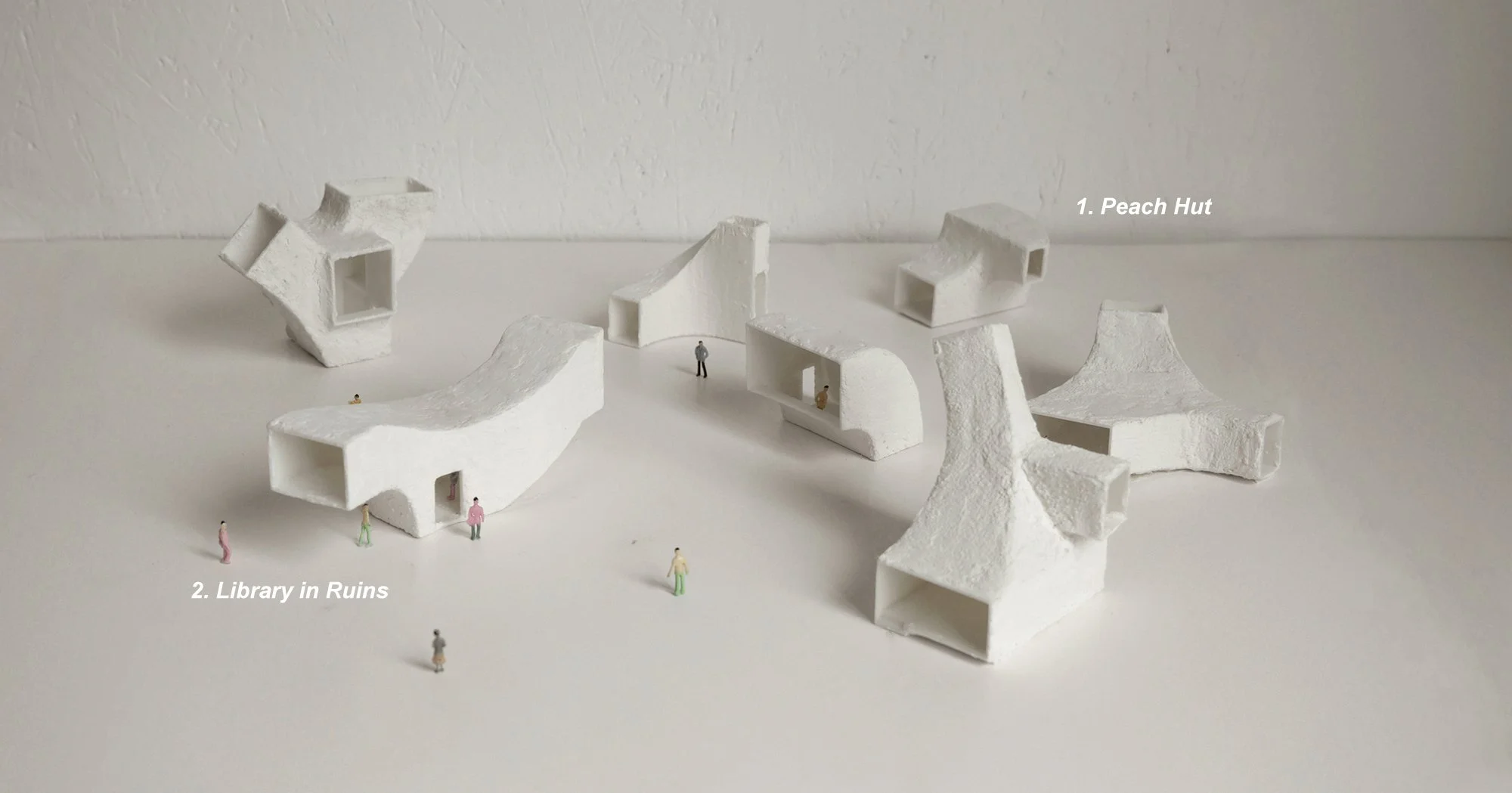
最初,建筑师被委托在河南修武县设计一个300平米的文化建筑,来提升乡村社会的美学文化素养。然而考虑到630平方公里的县域面积和相距遥远的分散村落,建筑师提出将这个文化建筑单体分开成为一系列微型小品,可以更广泛的服务于社区的儿童与社区活动。
在村落里,比物质的匮乏更严峻的挑战来自教育资源、信息渠道和美学想象力的缺失。地方领导提出美学复兴乡村的主张、打造修武成为中国县域美学策源地,而建筑师希望在有限资源条件下用最微小的建筑改变隔绝和贫瘠的现实。
这些混凝土浇筑而成的微型建筑被设计为一系列带触角的树状空间,向天空生长以获取光与影,他们有的坐落在田间、有的在树林中、有的从废弃的村庄残墙里生长出来、有的在水塘中营造一个漂浮的剧场。7个单体被分期为两个阶段,第一期将是:水剧场、桃屋和废墟书屋。
In the beginning, the architect received the original commission to design a 300-square-meter public building for facilitating the county’s culture and art education in Xiuwu, Henan. However, considering the vast serving area (630-square-kilometer county area) and the difficulty of traveling between scattered villages, the architect came up with a proposal to divide one building into a series of miniature facilities in different locations so as to better serve local communities.
The long-term drawbacks of remote rural areas include insufficient educational resources, inadequate information access and scant aesthetic imagination. Thus, community leaders and the architect seek for an aesthetic approach towards rejuvenating these communities. Through these minimal architecture investments, the project aims to inspire sensibilities of local residents, to help them enjoy and rethink life quality, as well as to alleviate isolation and poverty.
These cast-in-place concrete miniatures are interpreted into a series of tree-shaped spaces with tentacles reaching out for the sky, bathing in light and shadow. Their locations vary from fields, woods, to mountaintops, and their forms differ as well: while one grows out from the ruined walls in an abandoned village, another embodies a floating theater on the water.
The construction of the seven units is divided into two phases with the first phase consisting of Water Theater (a vernacular theater), Peach Hut (a pavilion in a peach tree farmland) and Library in Ruins (a communal library).
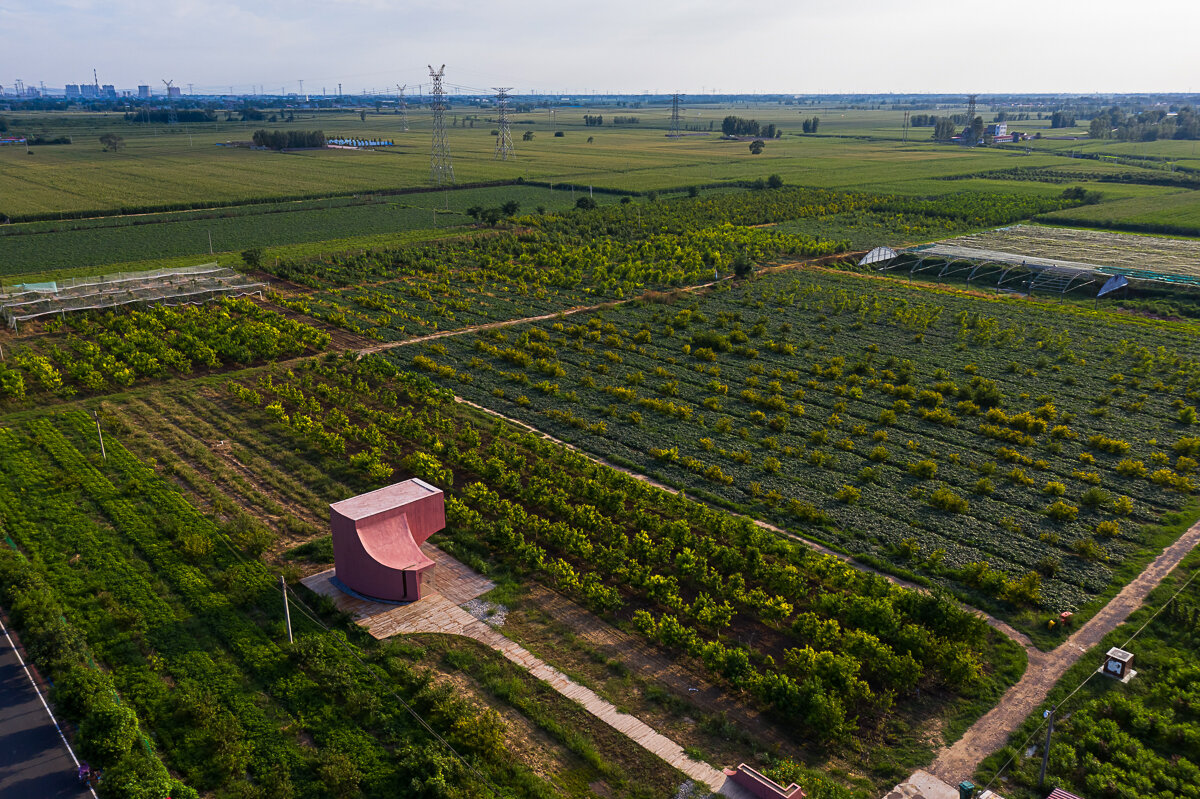
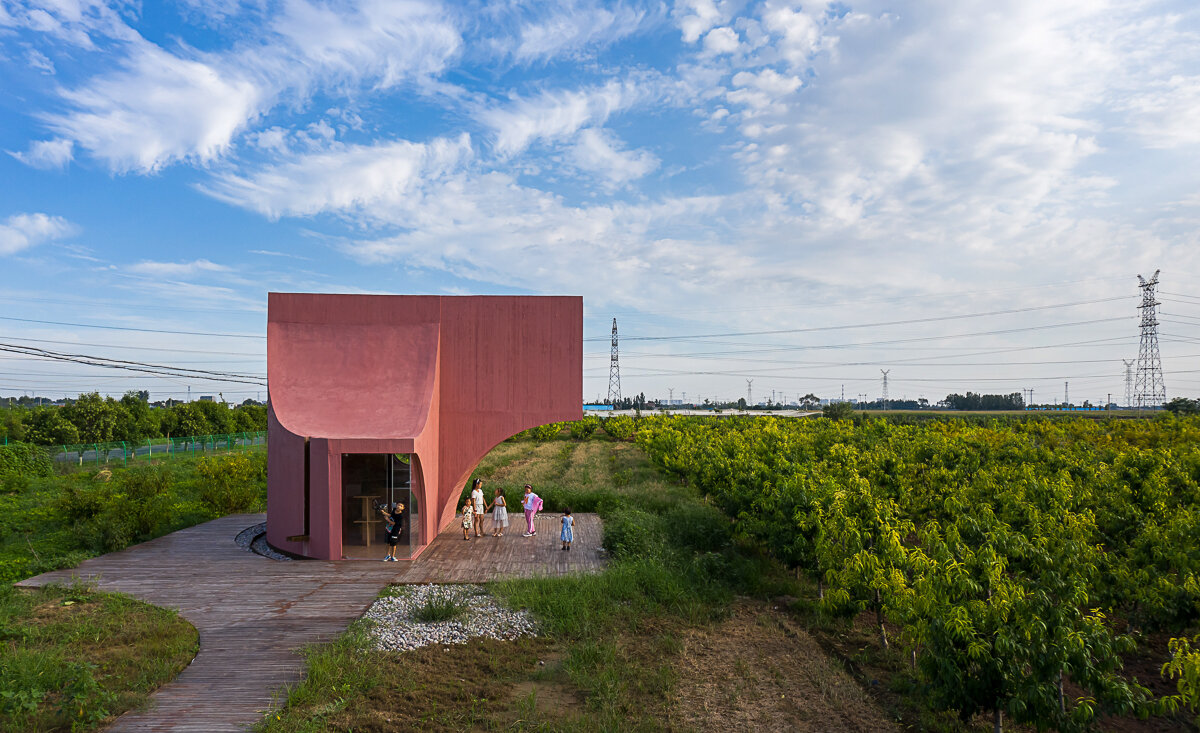
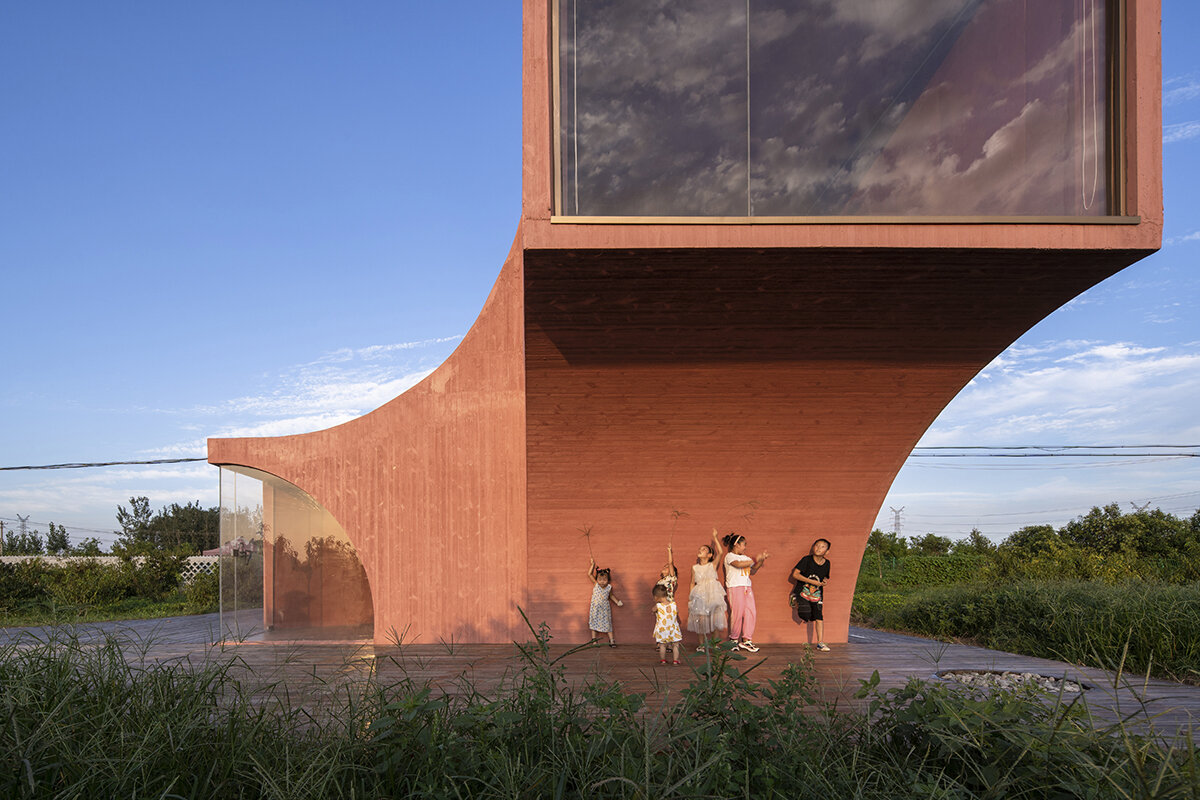
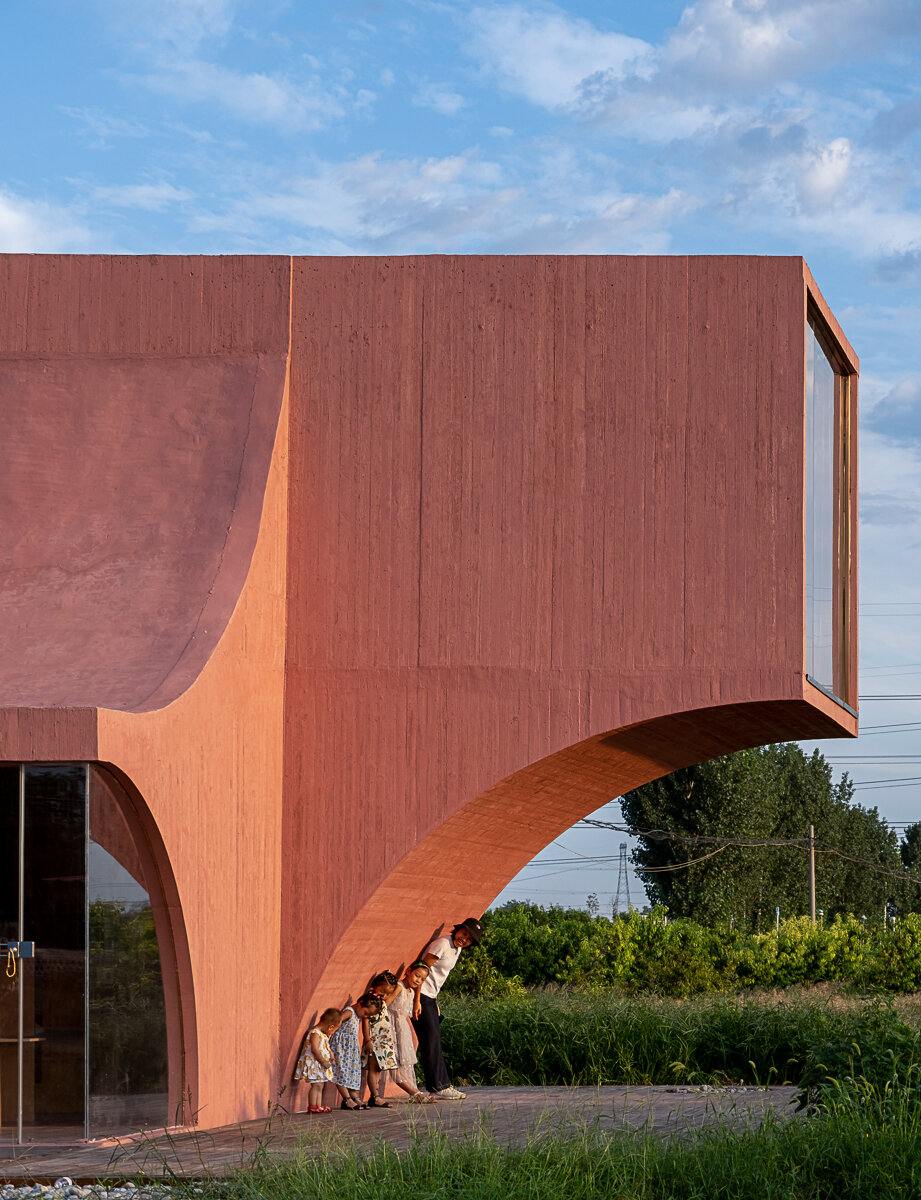
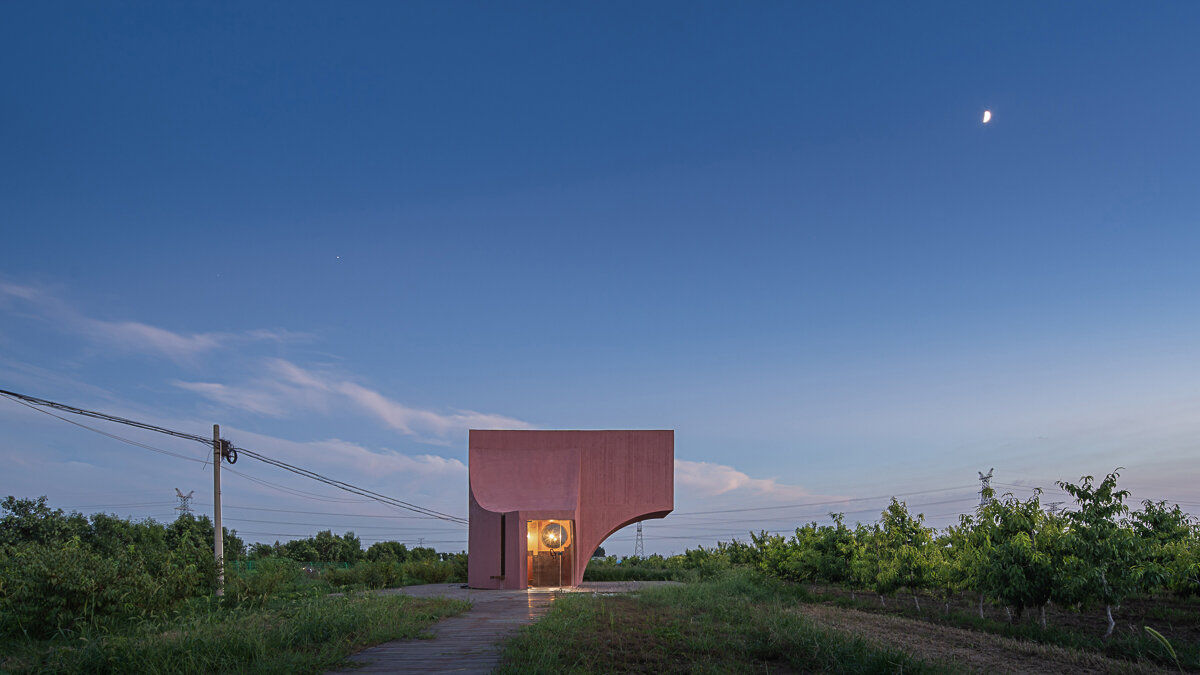
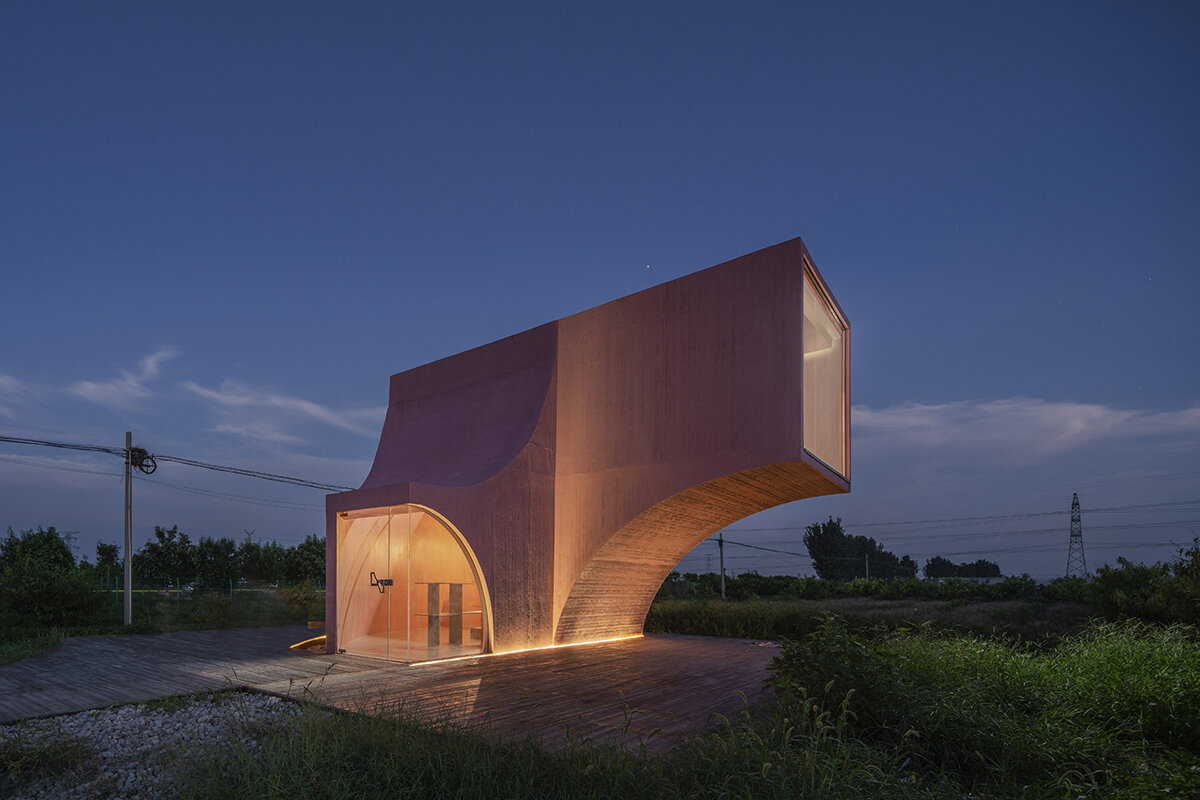
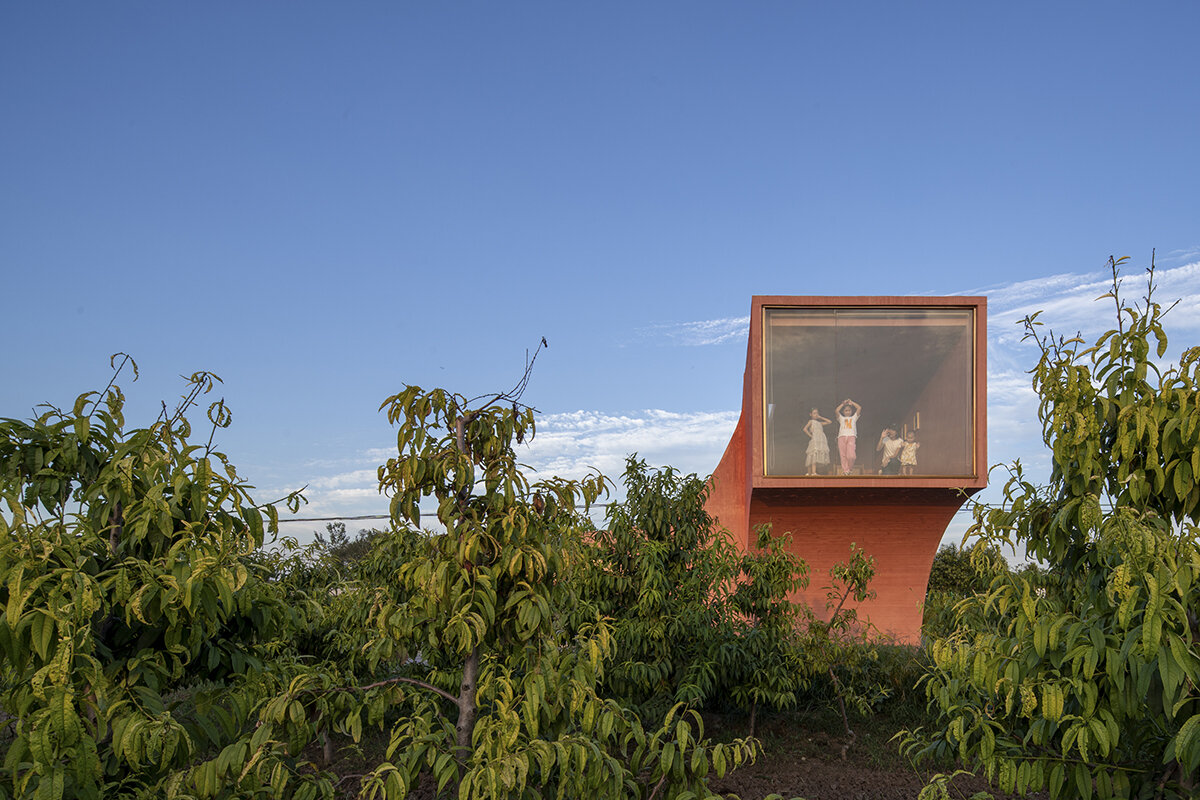
第一个落成的微建筑“桃屋”坐落于一片桃树果林中,场地上桃树呈“一边倒”形态,启发了建筑形体创作,建筑师设想建筑是由一系列来自场地上的无形弧线所切割而成,形成跃升向天空的独特形态。
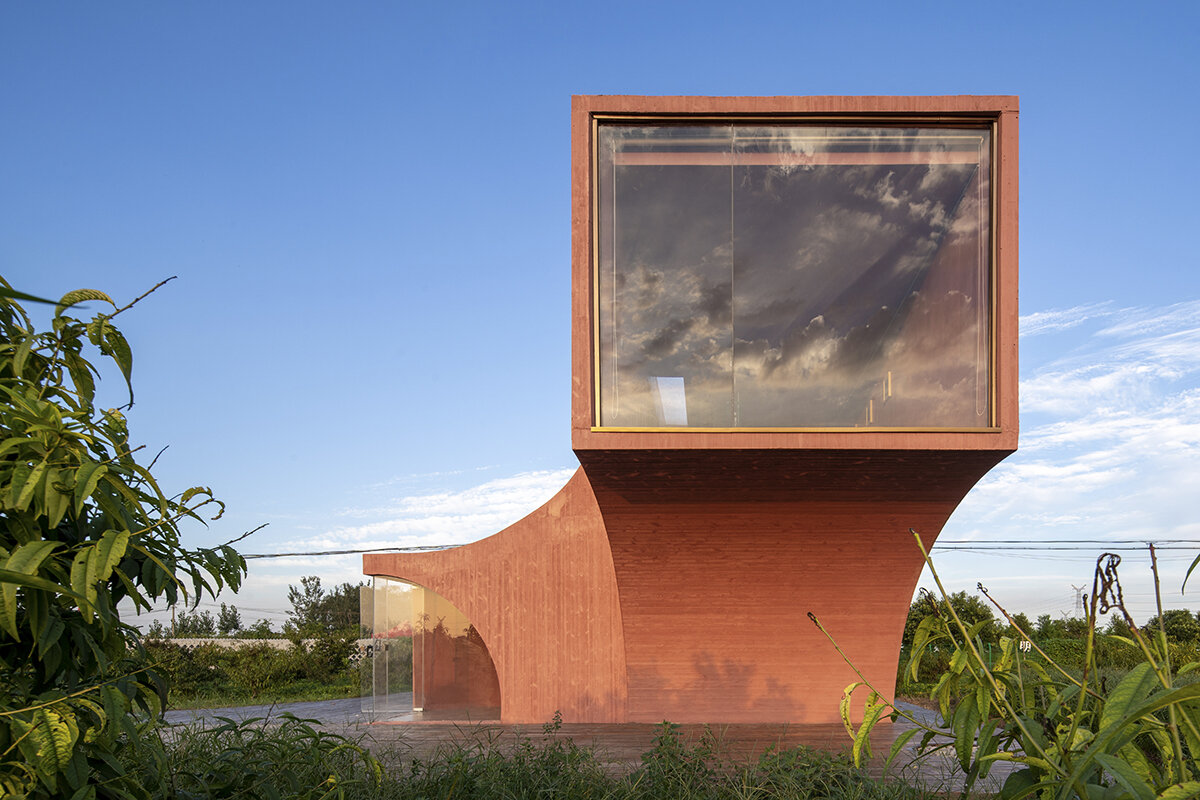
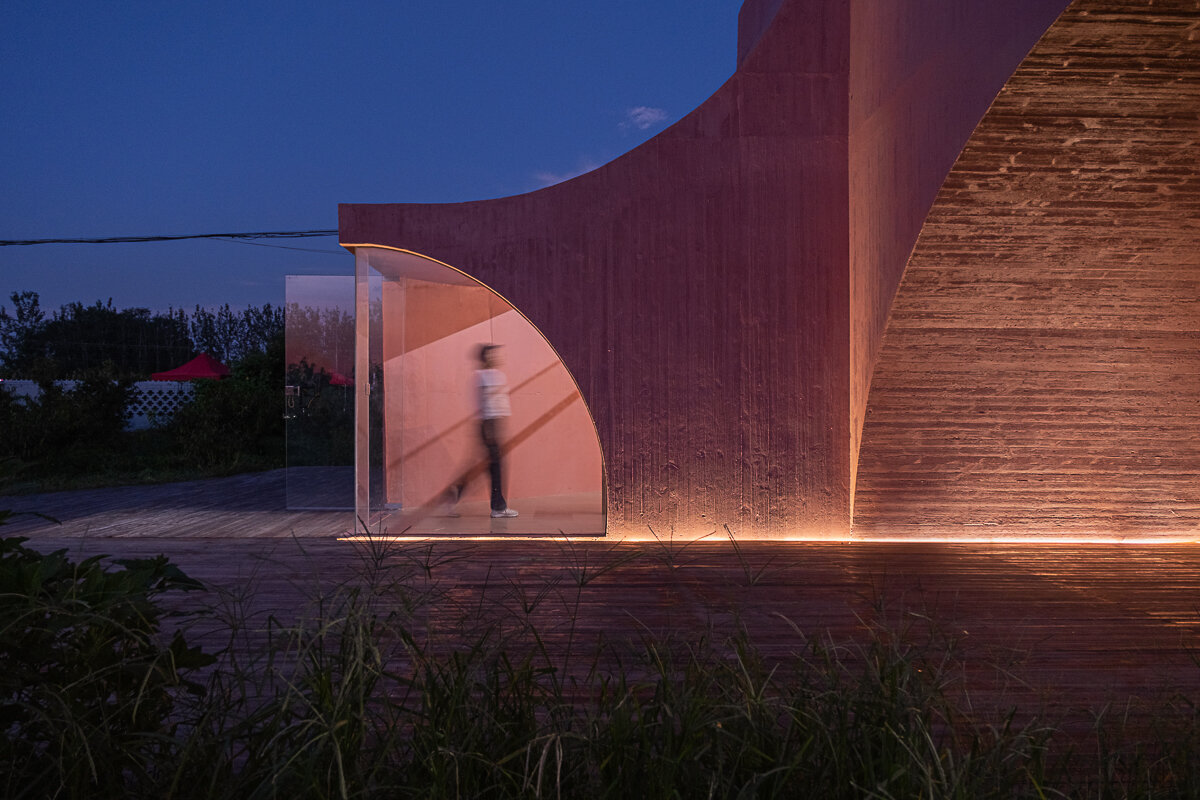
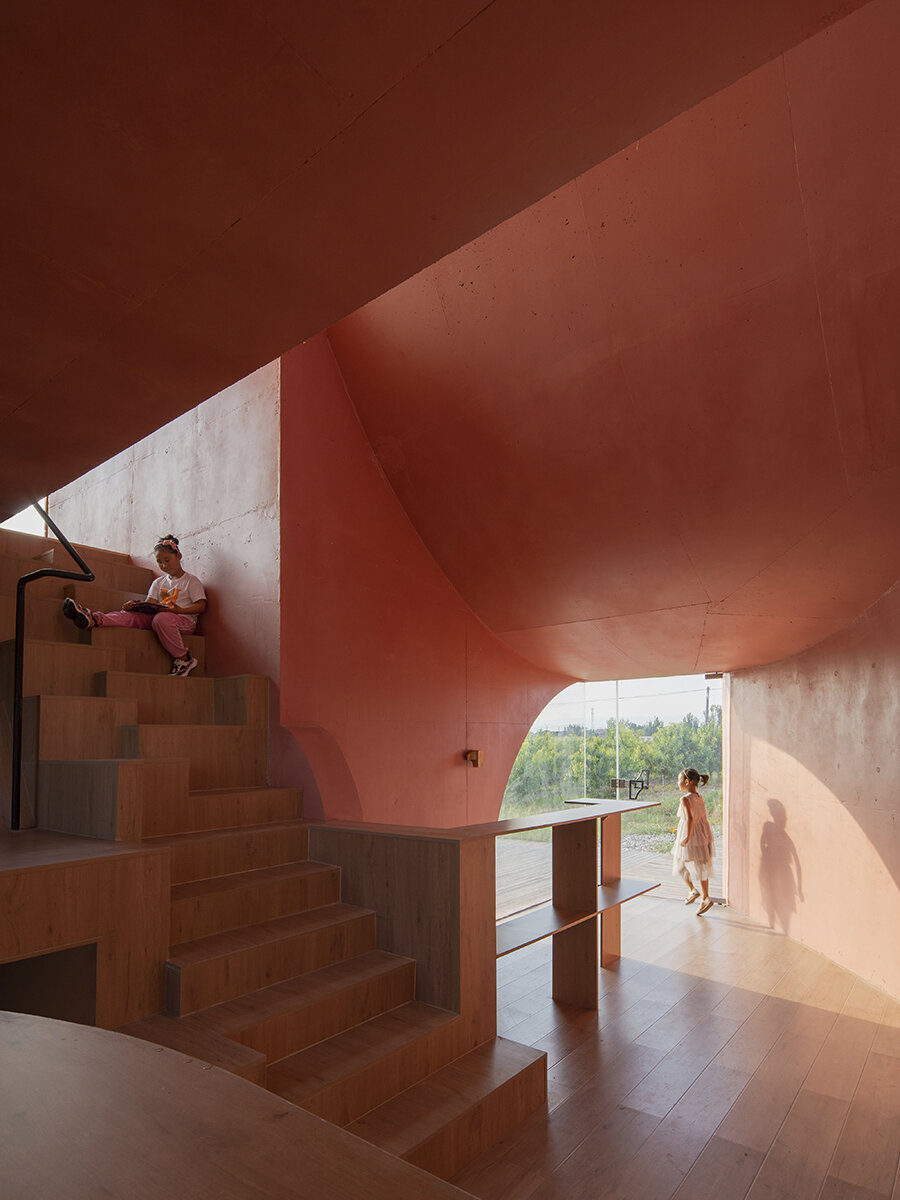
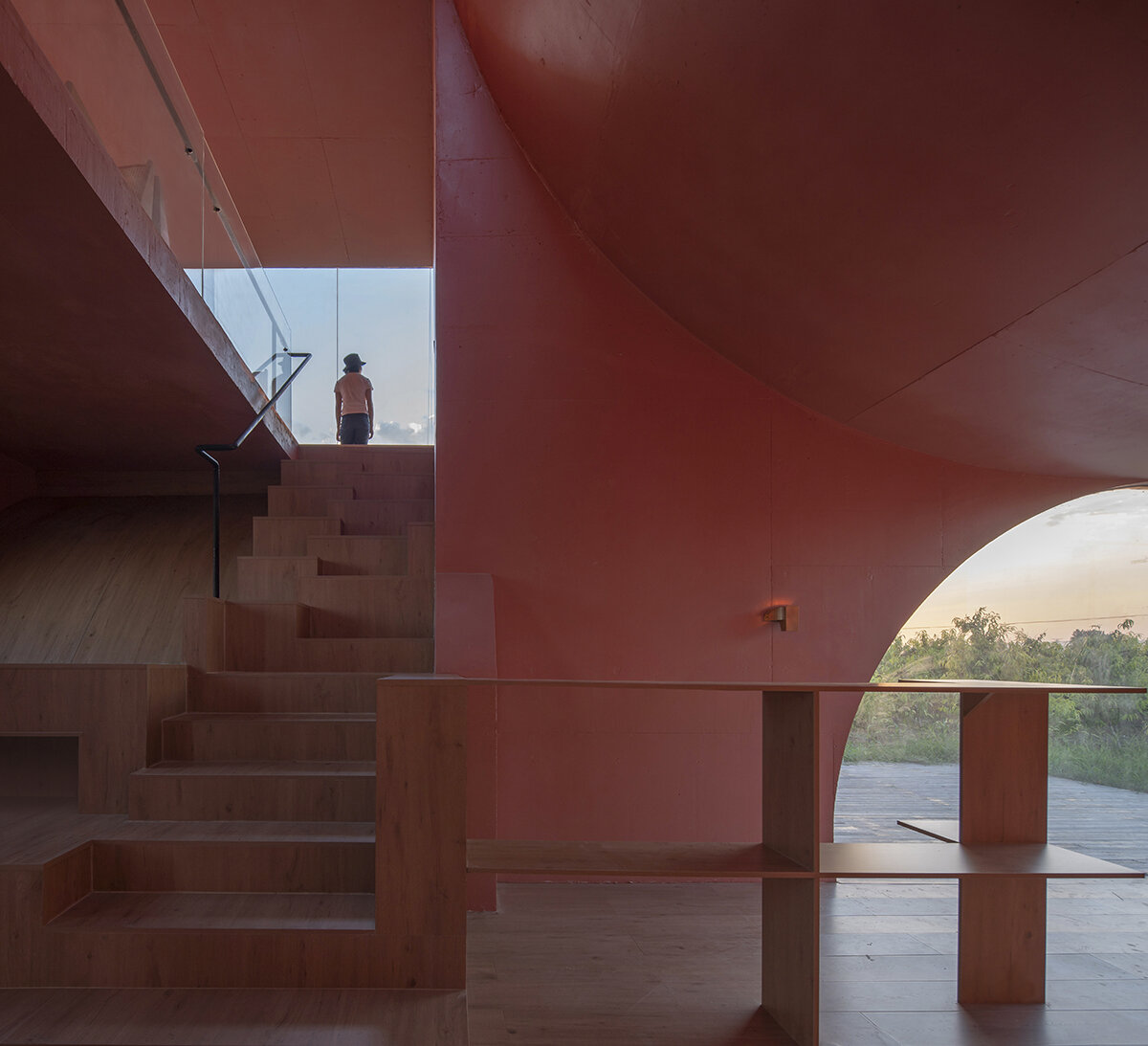
在桃屋中,所有的窗户都是不同形状的,对应不同的景观与光线角度:二层落地大窗跃过并不高大的桃树林,俯瞰田庄全景;南侧圆窗沿中轴转动,面向南方果园和阳光,成为可以转动的画框;转角的竖长窗拉长了果园至村庄的景深;而屋顶横窗洒落下的阴影在每个时刻变幻着;入口角窗则以一个四分之一圆弧勾勒出弯腰的桃树和温润的土地。
"Peach Hut", the first completed miniature pavilion, is surrounded by a field of blossoming peach trees in a farmland. The trees on the site which all lean to one side, which inspired the sculptural form of the architecture. The architect envisions that the building is cut from a series of invisible arcs derived from the earth and the cloud, forming a unique shape that rises to the sky.
In the Peach Hut, all windows are of diverse shapes, responding to different views and light angles: the large floor-to-ceiling window on the second floor allows viewers to jump over the peach trees and overlook the panoramic view of the farm; the round window frame on the south side rotates along the central axis, and captures dynamic imageries of the orchard under the subtle variation of daylight; the vertical windows at the corners lengthen the depth of field from the orchard to the village at far; the shadow resulted from the skylight changes at every moment; and the entrance corner window is made as a quarter circle resembling the stooped peach trees, thus resonating with the picturesque land.
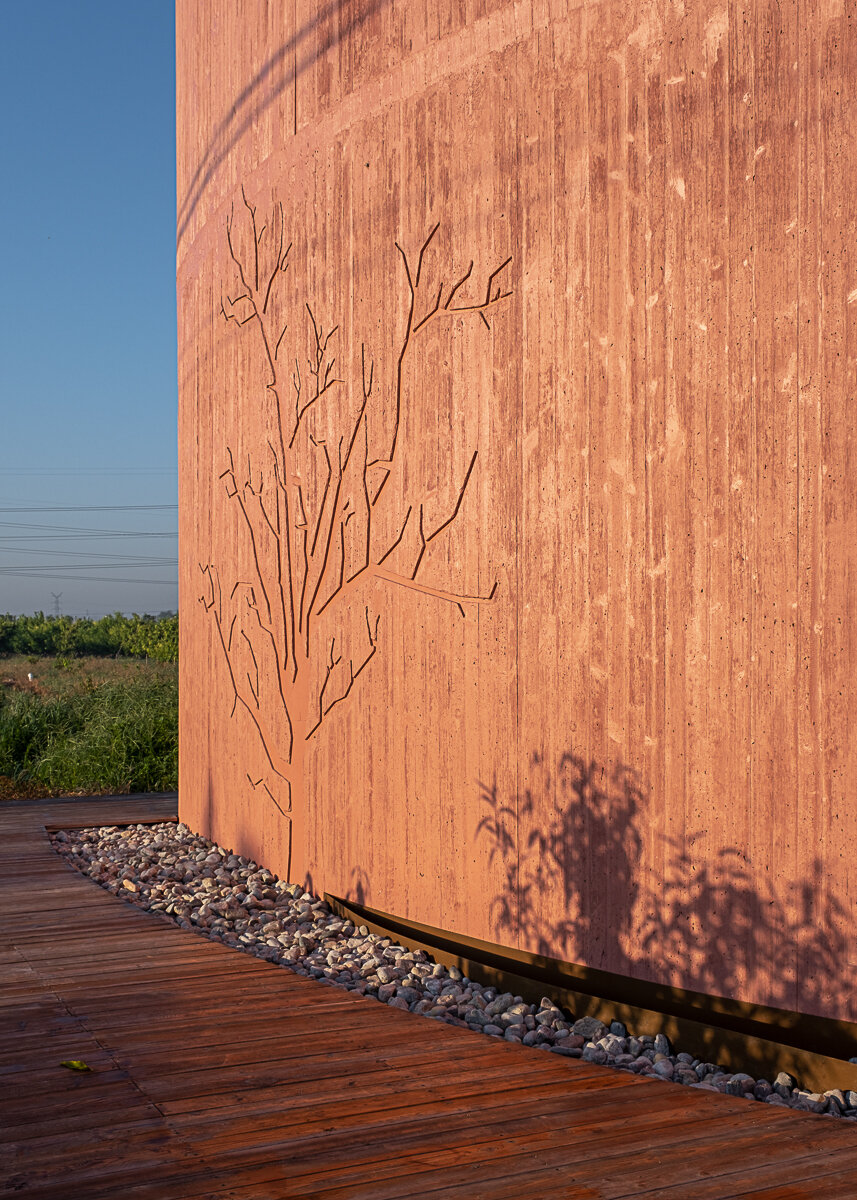
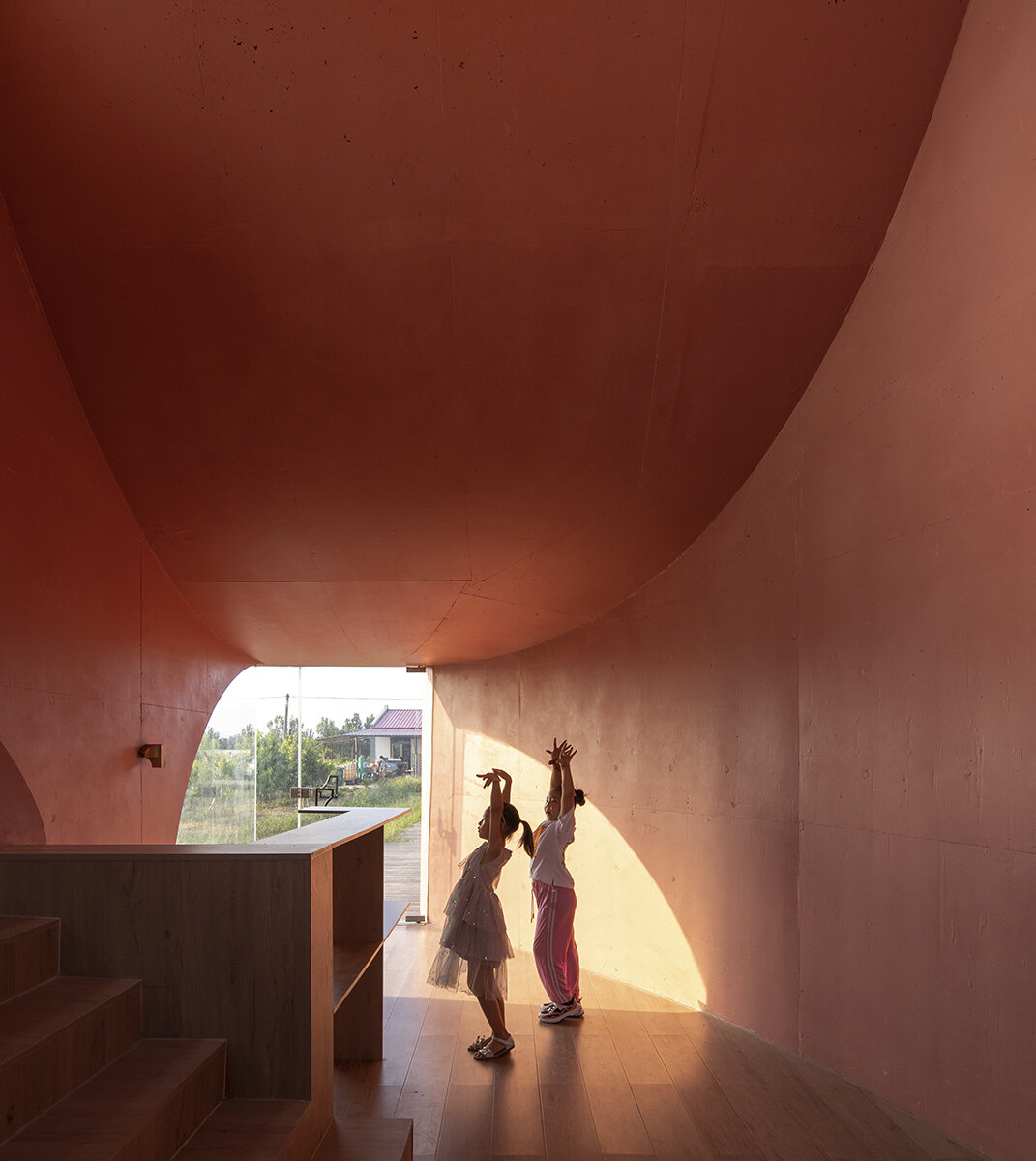
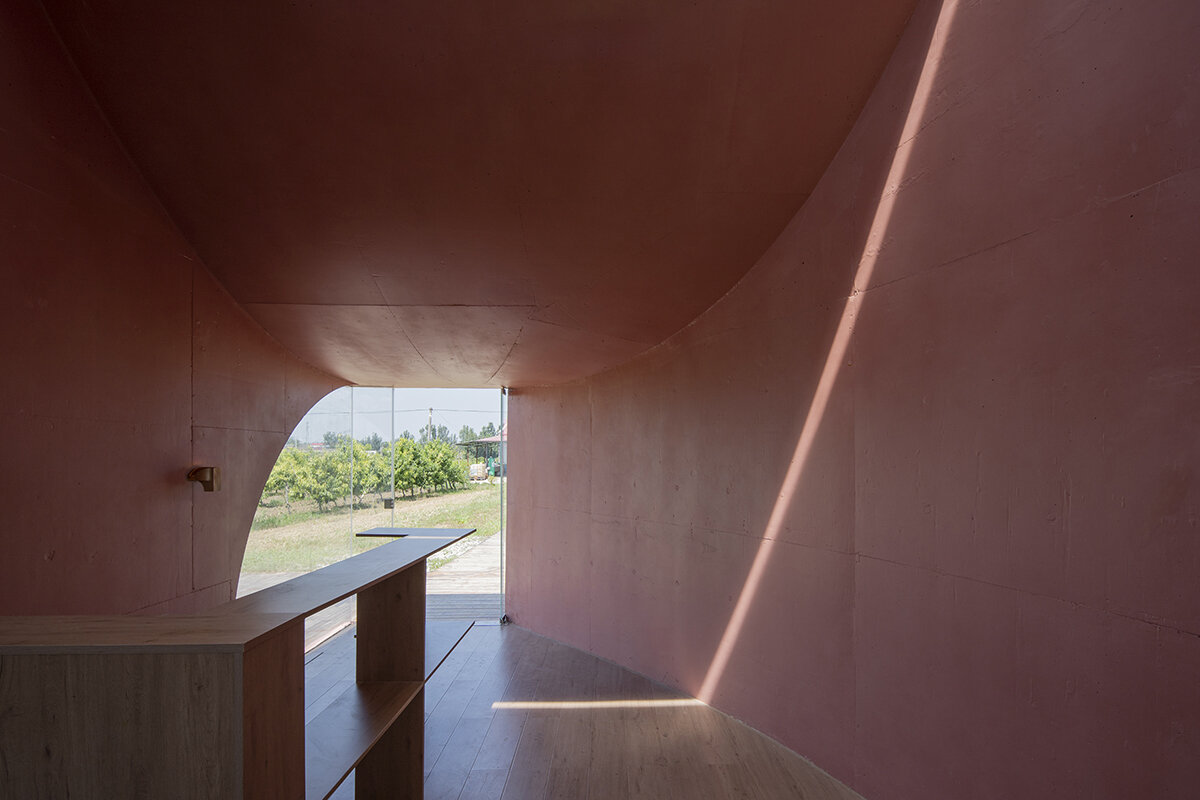
因为难忘第一次在场地上见到满园的桃花盛开,建筑师决定用粉色现浇混凝土建起这座建筑。经过一次次现场试验后,建筑师与施工队终于调配出符合期望颜色和混凝土强度的配方。建筑外墙用碳化小木模板支模浇筑勾勒出弧形轮廓的圆滑线条,建筑内部则用镜面模板浇筑起光滑的室内墙面、迎接天光的洒落。在清晨、正午、黄昏或夜色中,粉色混凝土墙面会因为不同光线而呈现出不同的颜色状态。
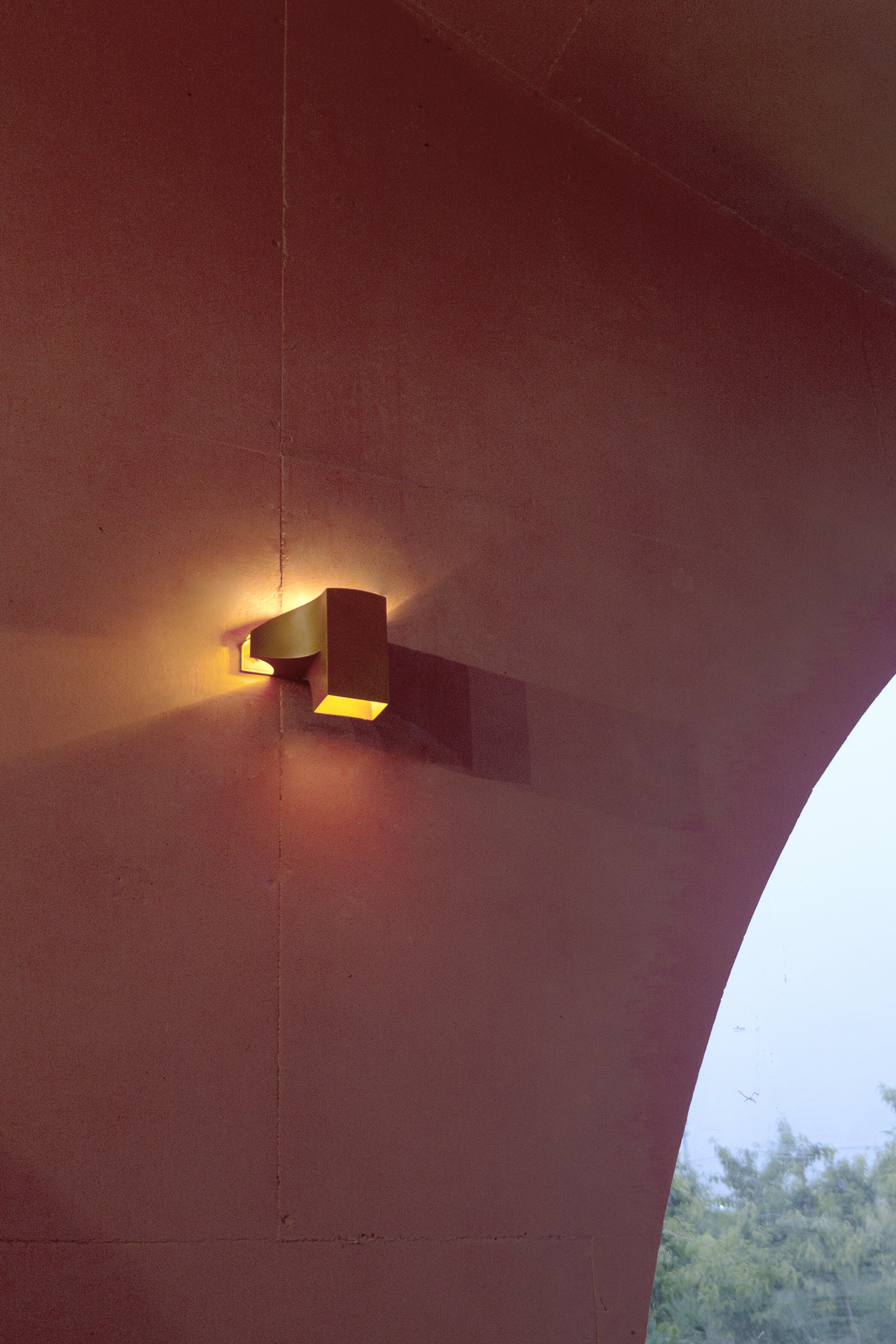
建筑师希望能在这个建筑中留下一些仅仅属于这片土地的印记,因此在室内用建筑体的轮廓设计制作了一个金属壁灯与门把手;而在立面上用特制模板浇筑出一棵浮雕树,向着东方日出的方位。
Impressed by the peach blossoms on the site during the first visit, the architect decided to coat the building with pink cast-in-place concrete. After repeated field tests, the architect and the construction team eventually found a formula that met the desired color and concrete strength. The exterior concrete finish is cast with small wooden formwork to outline the contour of the curved geometry, and the interior finish is cast with a smooth formwork to better reflect the skylight from above. In early morning, at noon, dusk and night, the pink concrete wall reveals different colors and qualities based on the changing light conditions.
The architect hopes to leave a few marks on the building that belong only to this piece of land. Therefore, a bronze wall sconce and black steel door handles are designed with the outline of the building; and a relief tree is cast on the concrete facade with customized formwork, orientating towards sunrise to the east.
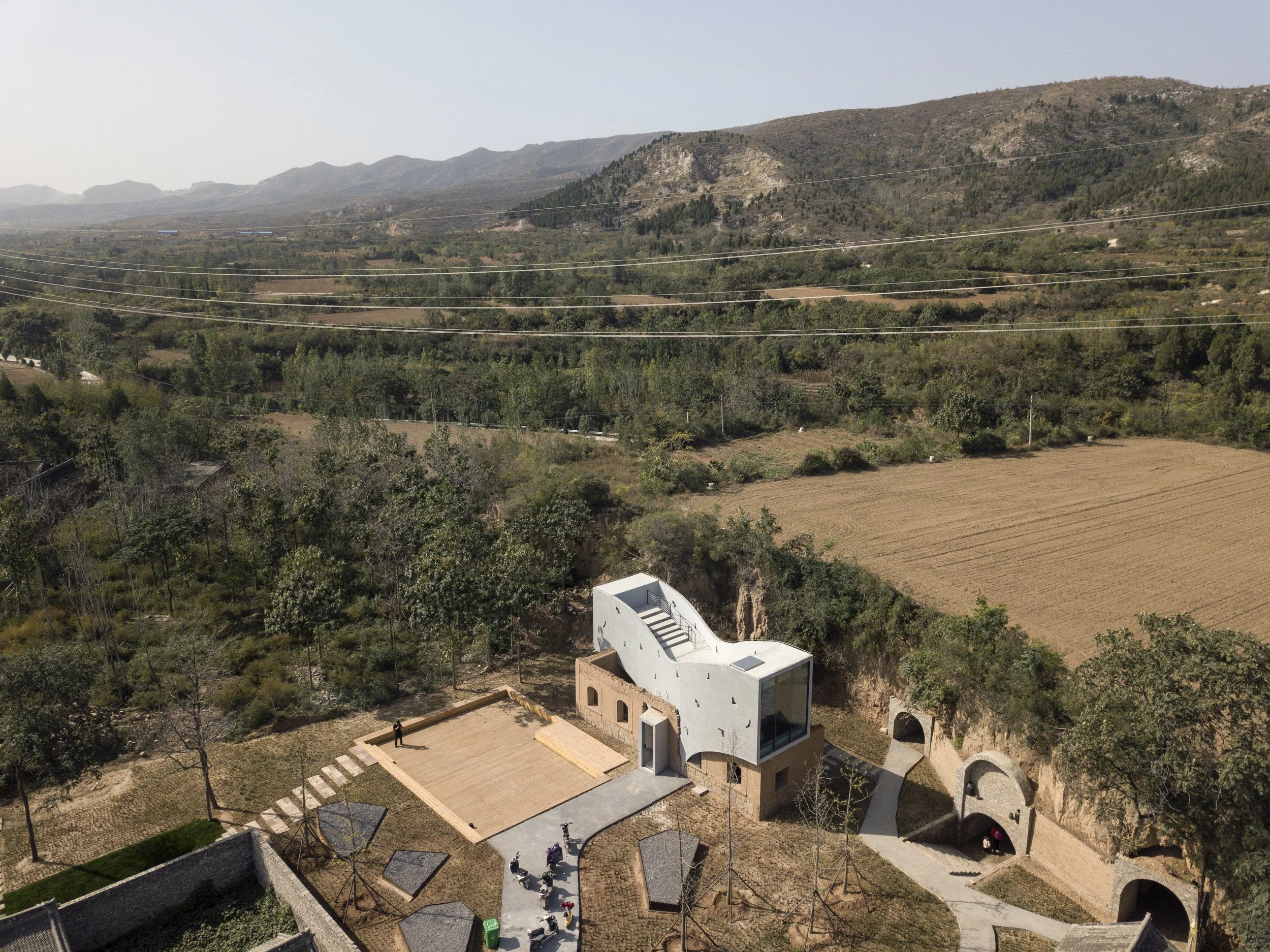
继第一个微建筑“桃屋”之后,第二个微建筑“废墟书屋”坐落于20公里外孙窑老村一处土坯房残垣中。孙窑老村地处远离乡镇中心的山区,自1996年起,村民们陆续搬入隔壁砖混结构的新村房屋,于是留下老村中许多土坯旧屋和窑洞日渐荒废,颓圮下来。现今场地周边起伏的远山、相邻处裸露的荒土崖壁以及崖壁之上的广阔田野展现出层次丰富的地形关系。
Following the first completed "Peach Hut", the second episode of the miniature series, "Library in Ruins", is constructed alongside the remnant of an adobe house in Sunyao Old Village which is 20 kilometers away from the Peach Hut.
Sunyao Old Village is located in a mountainous area far away from the town center. Since 1996, villagers have moved into the brick-concrete houses in the new village next door one after another, leaving behind many aged adobe houses and cave dwellings. Years have passed, and when the abandoned village was examined by the architect, its surrounding undulating mountains, the barren cliffs adjacent to the site, and the vast fields above the cliffs all manifested rich topographical relationships that would evoke design inspirations.
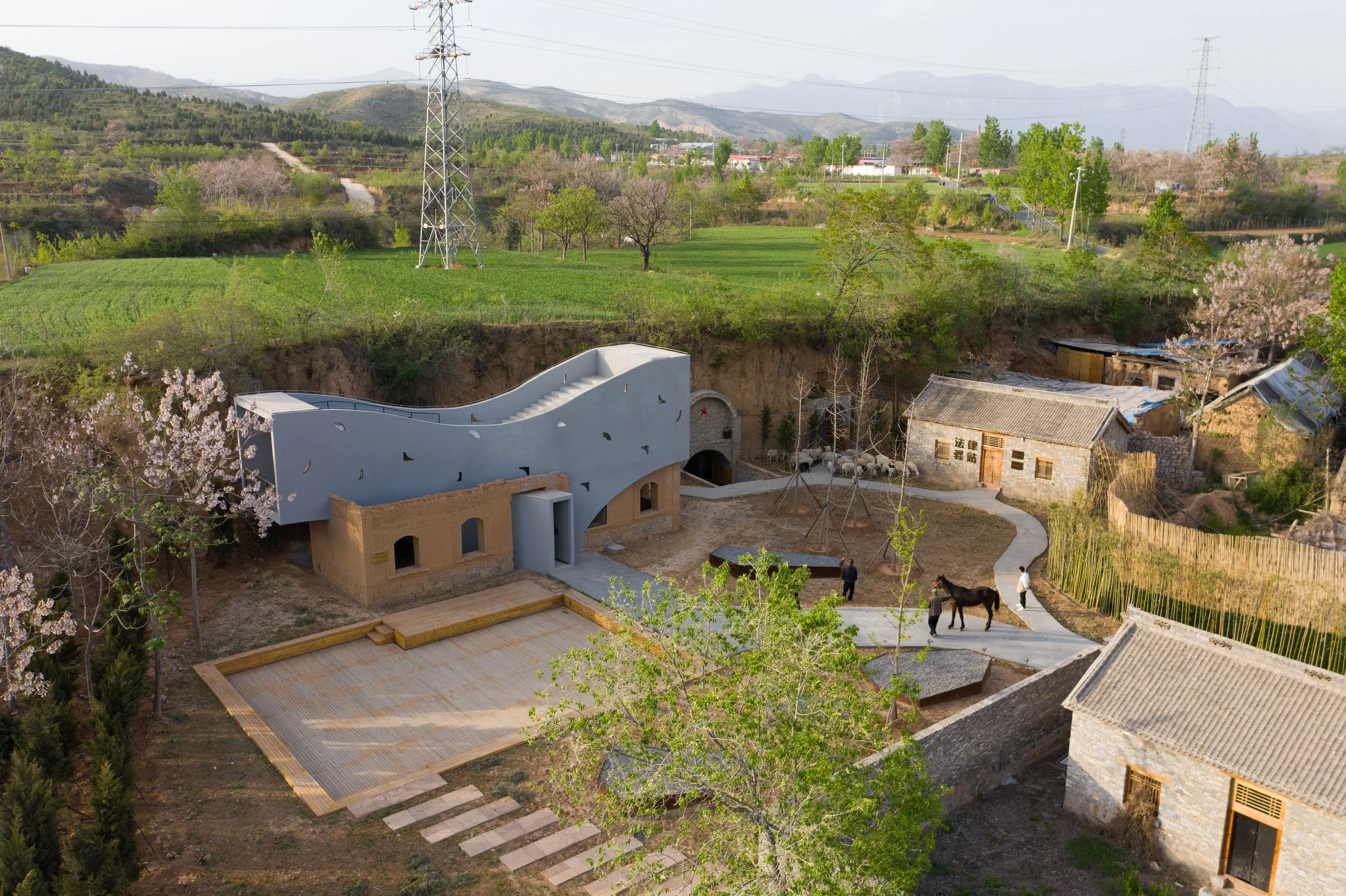
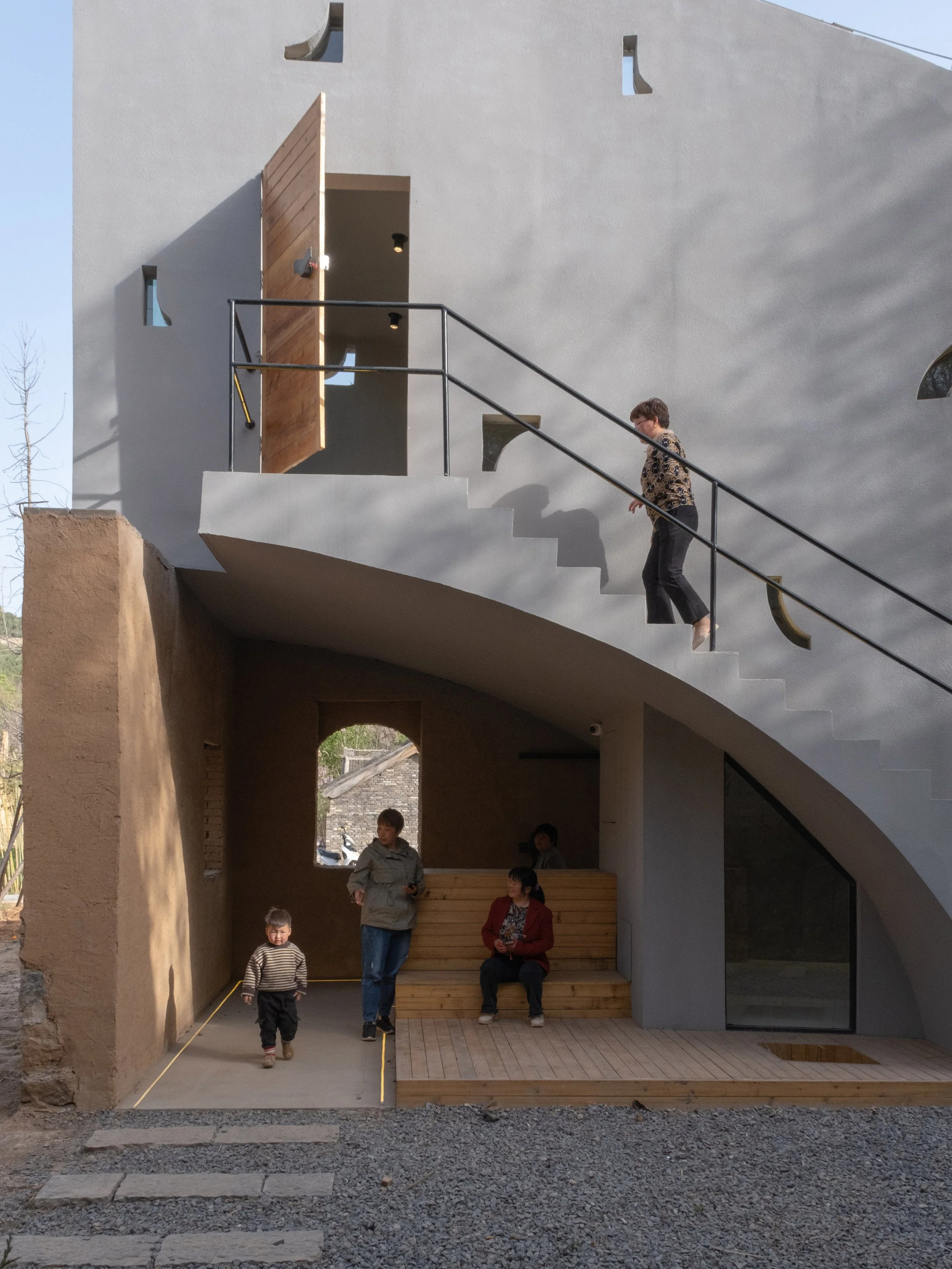
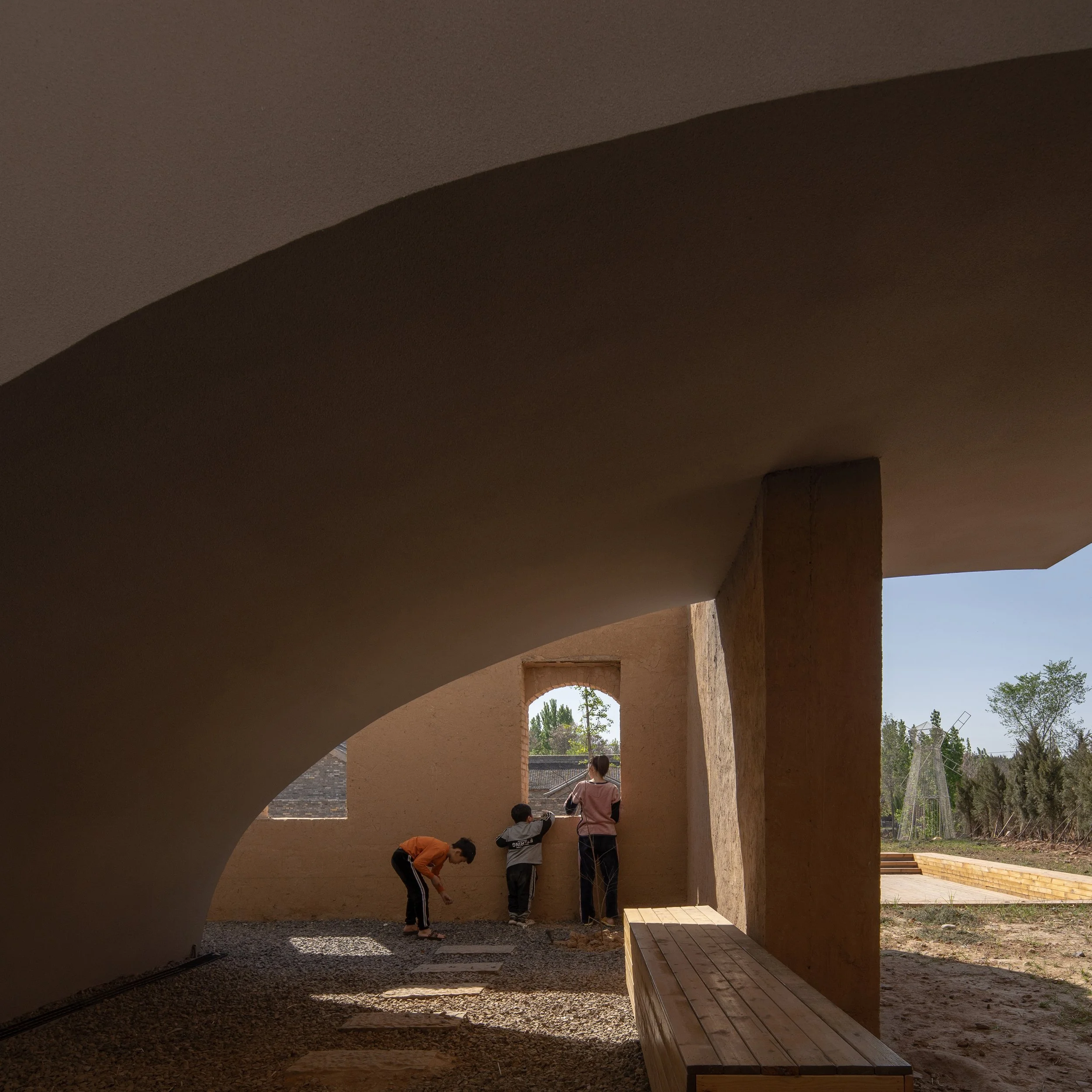
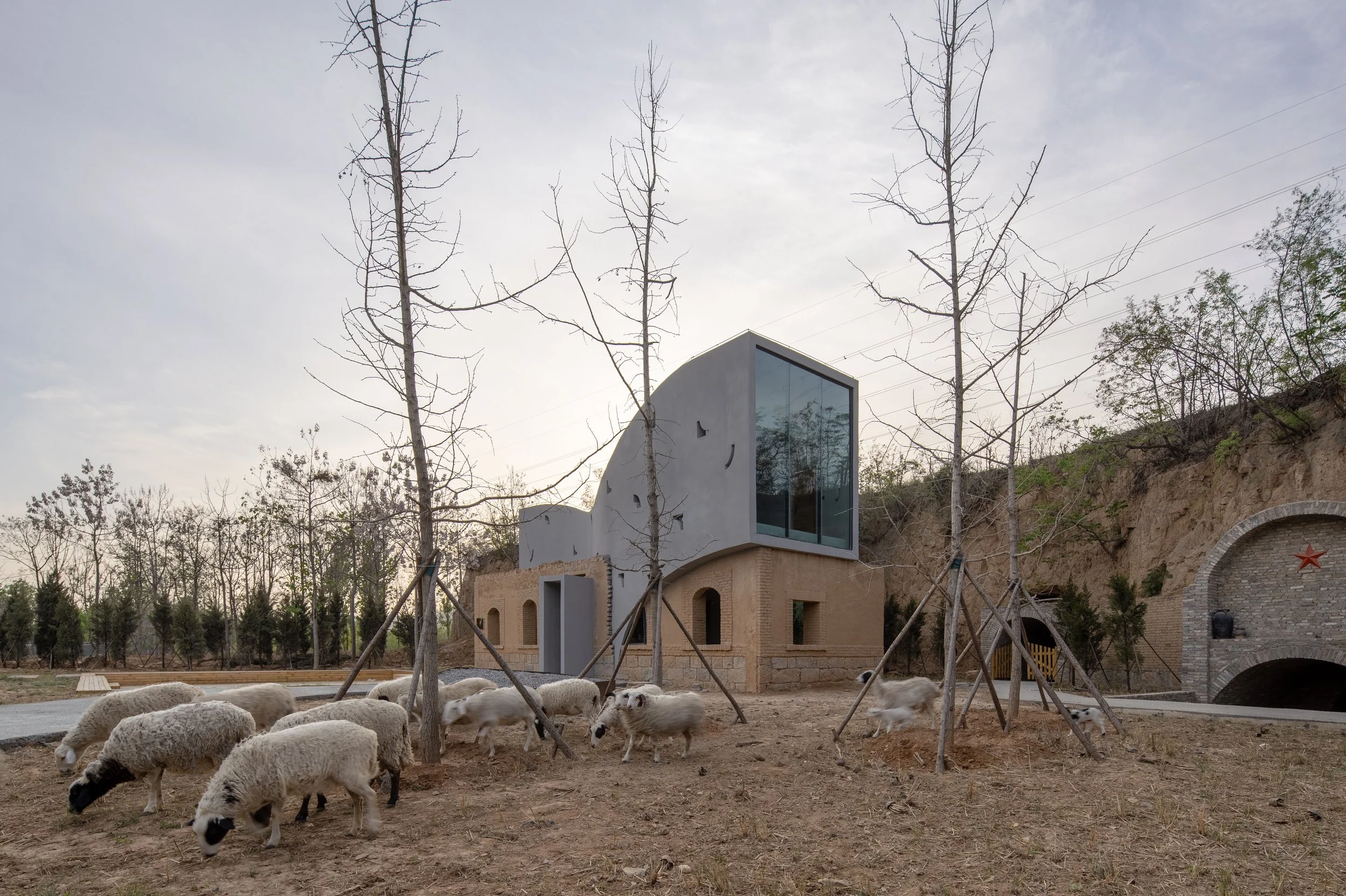
村庄提出可否利用原有宅基地范围内一处土坯墙废墟进行建设,然而寻遍附近工匠,都不再能找到可以修筑原有夯土工艺的工匠。于是建筑师提出可否以新工艺方式在废墟中进行建造,让一个新生的构筑物从旧的废墟中长出来:让新建筑成为人们进入废墟、跃升过老屋、观看村庄、田野与远山的一个空间容器。
At first, the village asked the architect whether it was possible to build inside the plot of the original house where only a part of ruined adobe walls was left. However, after searching for nearby craftsmen, villagers were no longer able to find any craftsman who could build with the original rammed earth technique. Therefore, the architect proposed to build with a new method to allow a new structure to grow from the old ruins: allowing the new building to become a spatial device where people enter the ruins, jump over the old houses, and gaze into the village, the fields, and the mountains in the distance.
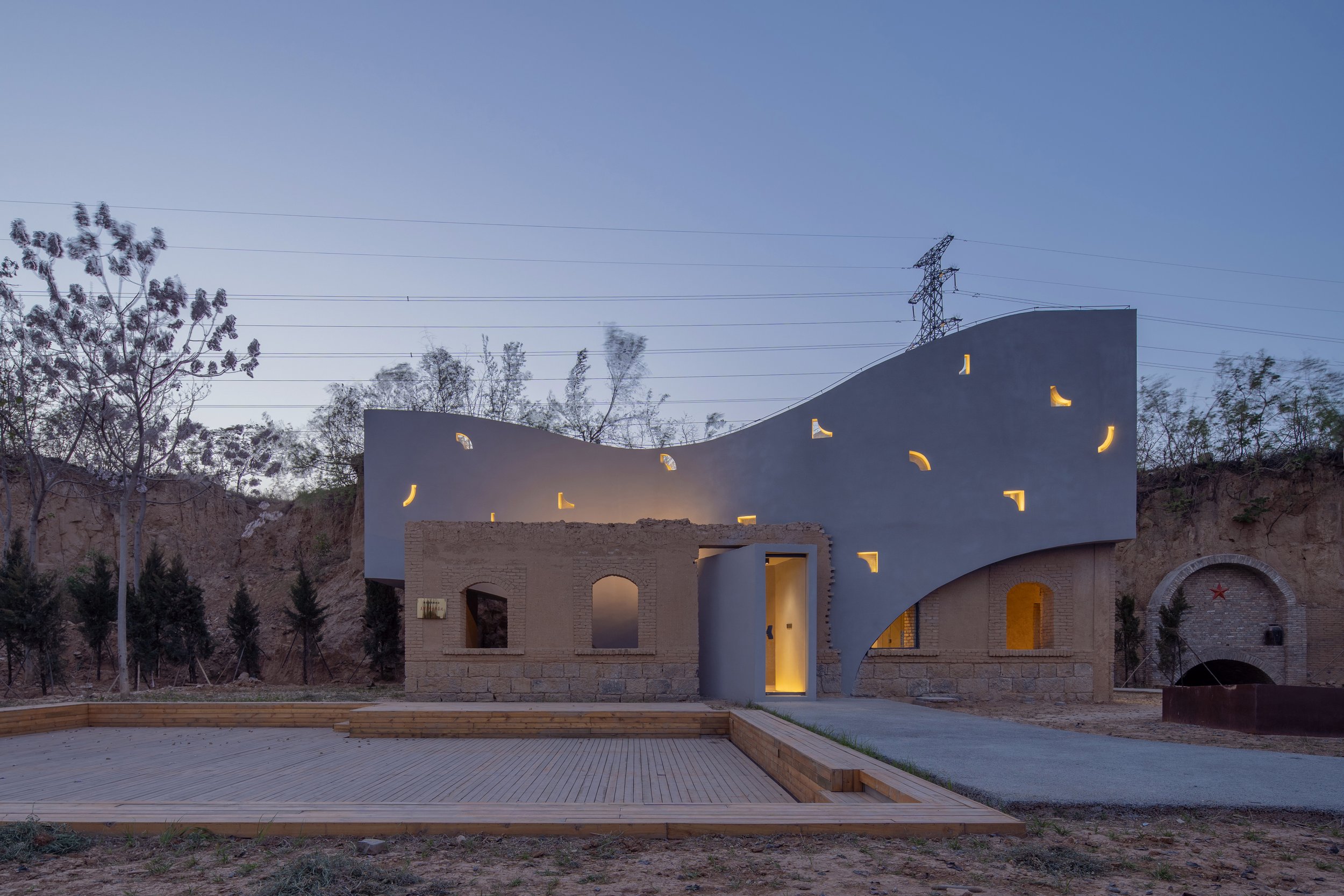
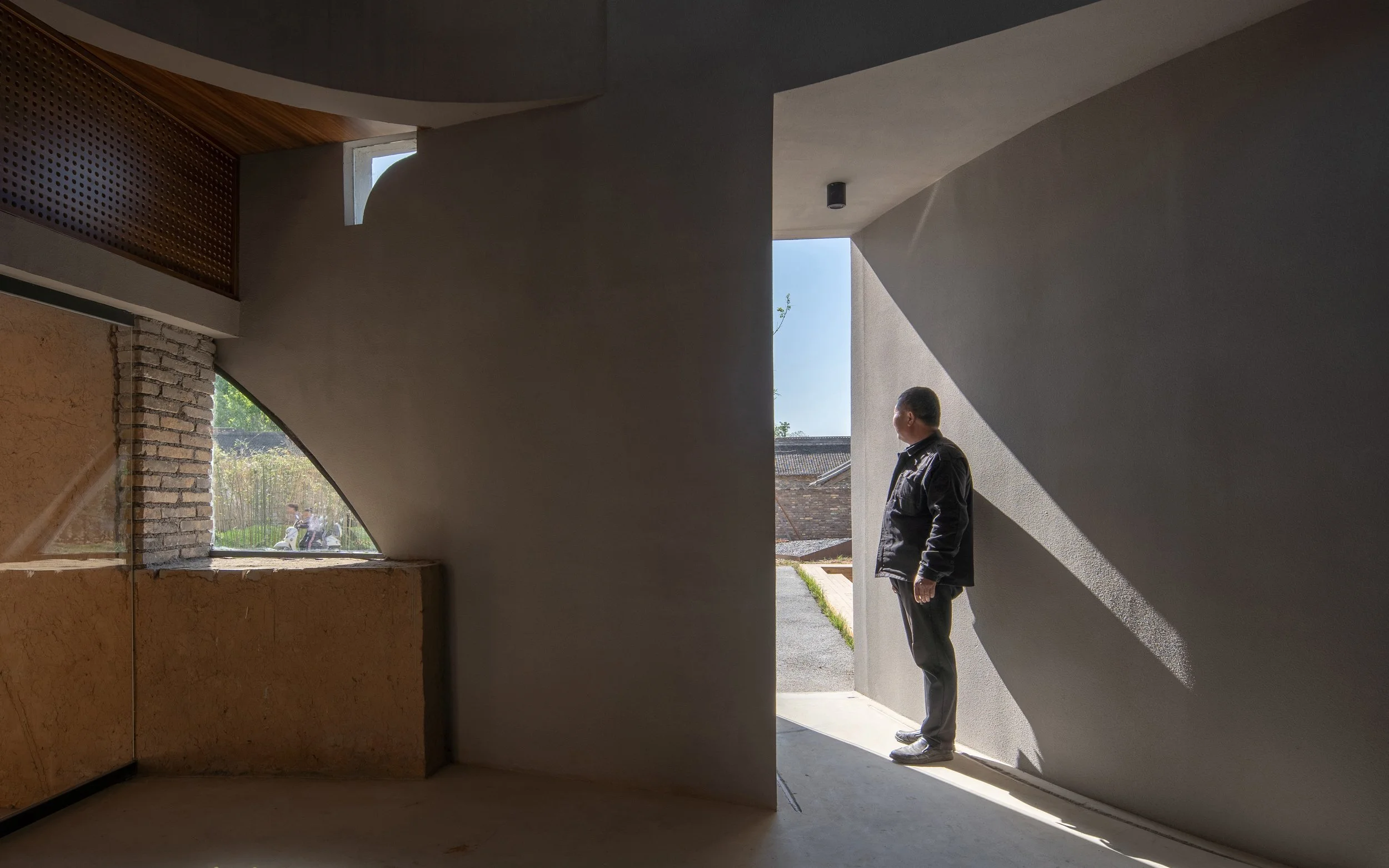
更进一步,建筑师希望在孙窑书屋中呈现两重互相缠绕的记忆:一方面连接起窑洞、荒山、残墙,这些带着厚重质感与时间痕迹的遗存;一方面则延续微建筑系列的形态特点,顺应场地的形势而成为从地形中生长而出的雕塑式空间。两重线索彼此交插,残墙上原先门洞位置伸出一个混凝土体量的入口邀人进入;而进入建筑后,残墙一角伸入室内,引导人们沿着残墙痕迹去探索后方窑洞与荒山崖壁;在后院混凝土墙壁上,旧式木门被沿用,持续提示着来访者新空间与旧物件之间的冲突与对话。
Furthermore, the architect hopes to present a duet of intertwined memories in this building: On the one hand, it connects cave dwellings, barren hills, and earth walls– physical remains with heavy texture and traces of time; On the other hand, it continues the formal languages of the miniature series while conforming to the context of the site to become a sculptural space that grows from the terrain. The two sets of memories spatially intersect each other: A concrete entrance protrudes out at the location of the original doorway on the remnant wall to invite people in; After entering the building, a corner of the remnant wall extends into the room, guiding people to explore the cave dwellings and the barren cliff in the rear garden; The traditional-style wooden doors are installed on the rear facade, continuously reminding visitors of the dialogues between the new space and the existing remnants.
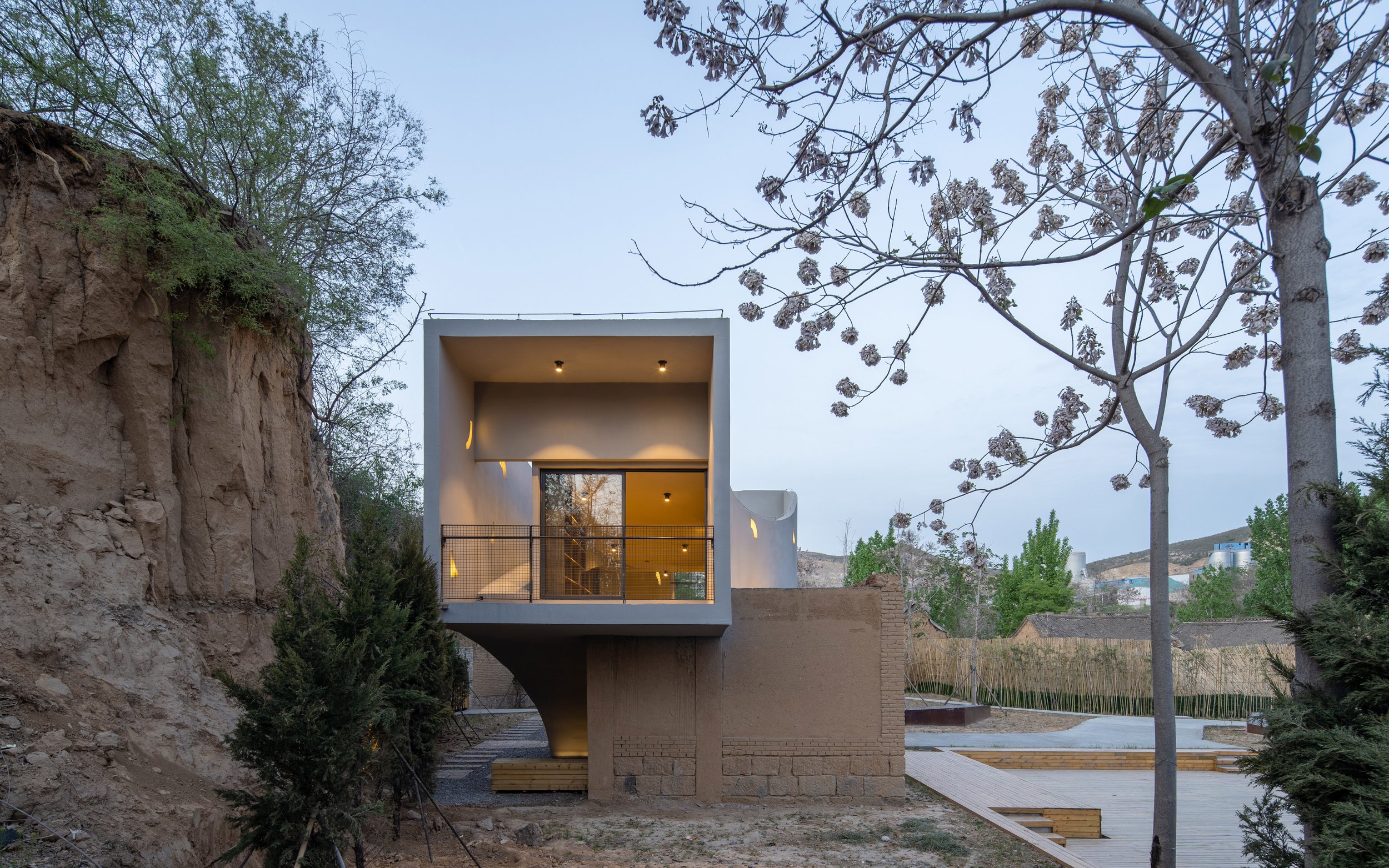
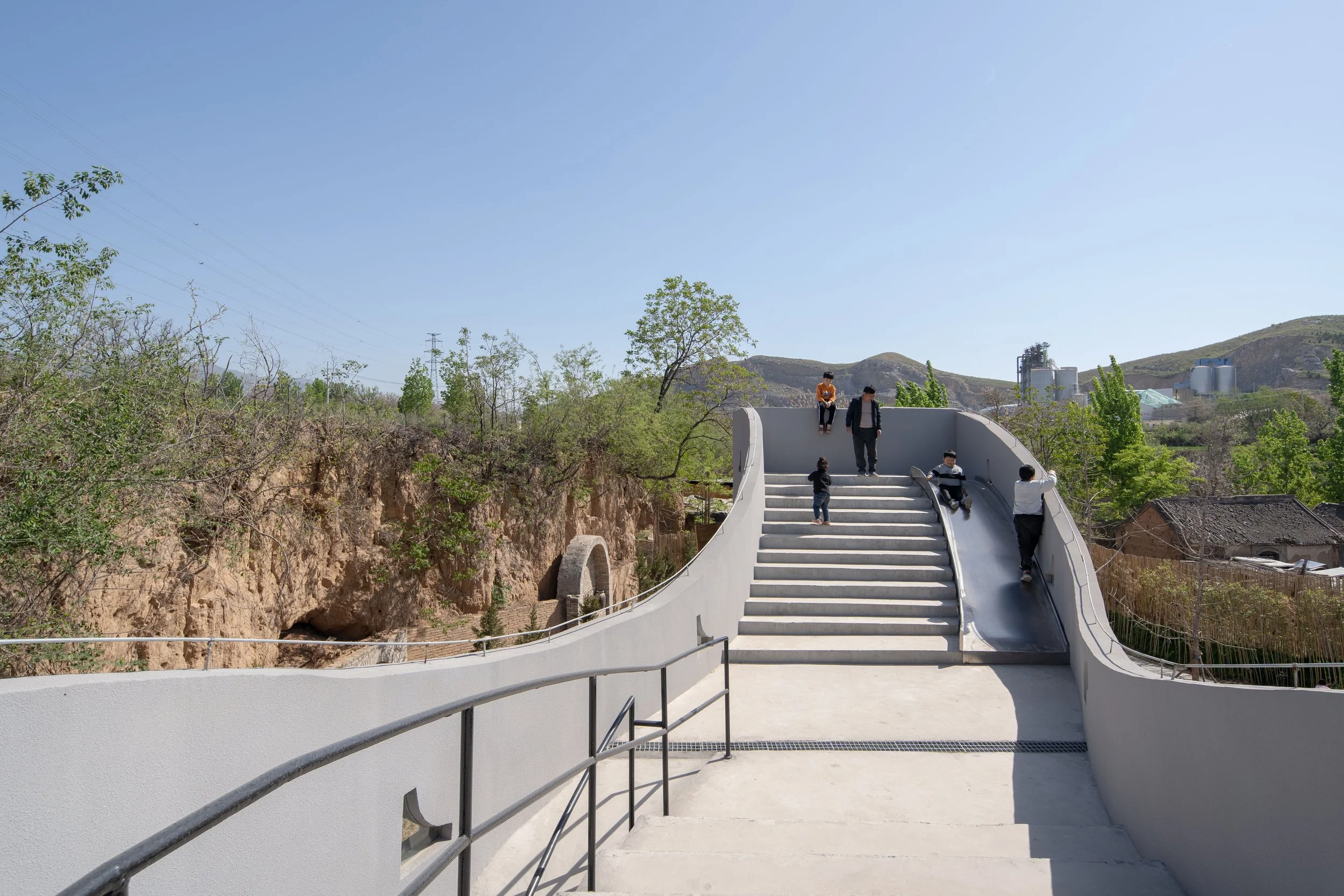
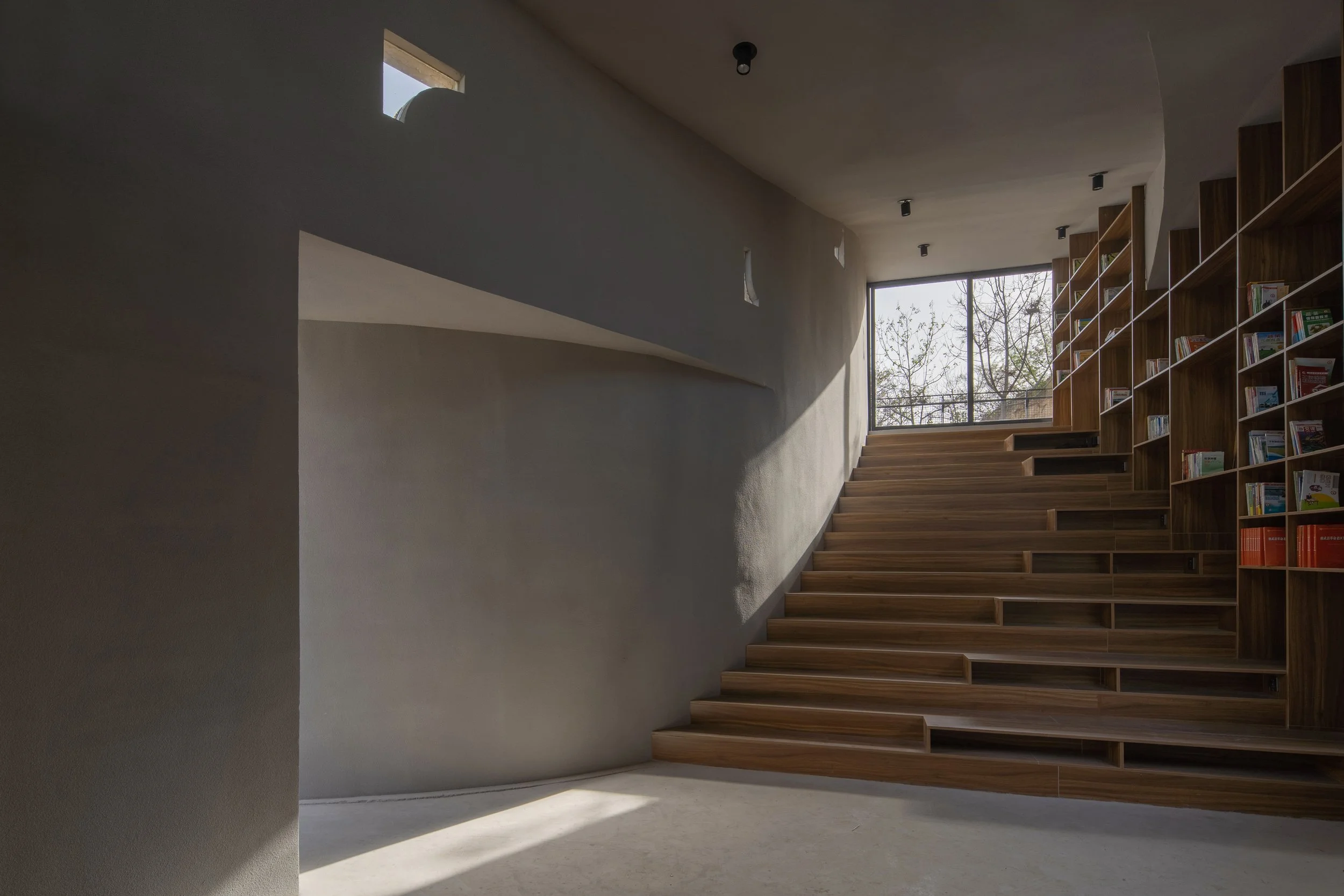
建筑的外形与内部空间以地形的状态展开。屋顶以起伏的轮廓呼应着地形与远山,而起伏地面在屋顶自然形成室外阶梯平台与滑滑梯。跃升过老屋的曲线剖面沟通起首层入口,二层阳台与屋顶平台。室内作为一个可以兼做小型论坛放映室的阶梯图书馆 。建筑蜿蜒的平面及周边路径则成为周遭迷宫般窑洞系统的延伸。
The facade and internal spaces of the building are unfolded in a topographic approach. The undulating outline of the roof echoes the terrain and distant mountains, and the roof ground naturally forms an outdoor terrace and a slide for children. The section curvature that jumps over the old walls links the first-floor entrance, the terrace, and the rooftop. The interior space functions not only as a stepped library, but also as a small projection room. The meandering plan of the building and the network of paths become an extension of the surrounding maze-like cave system.
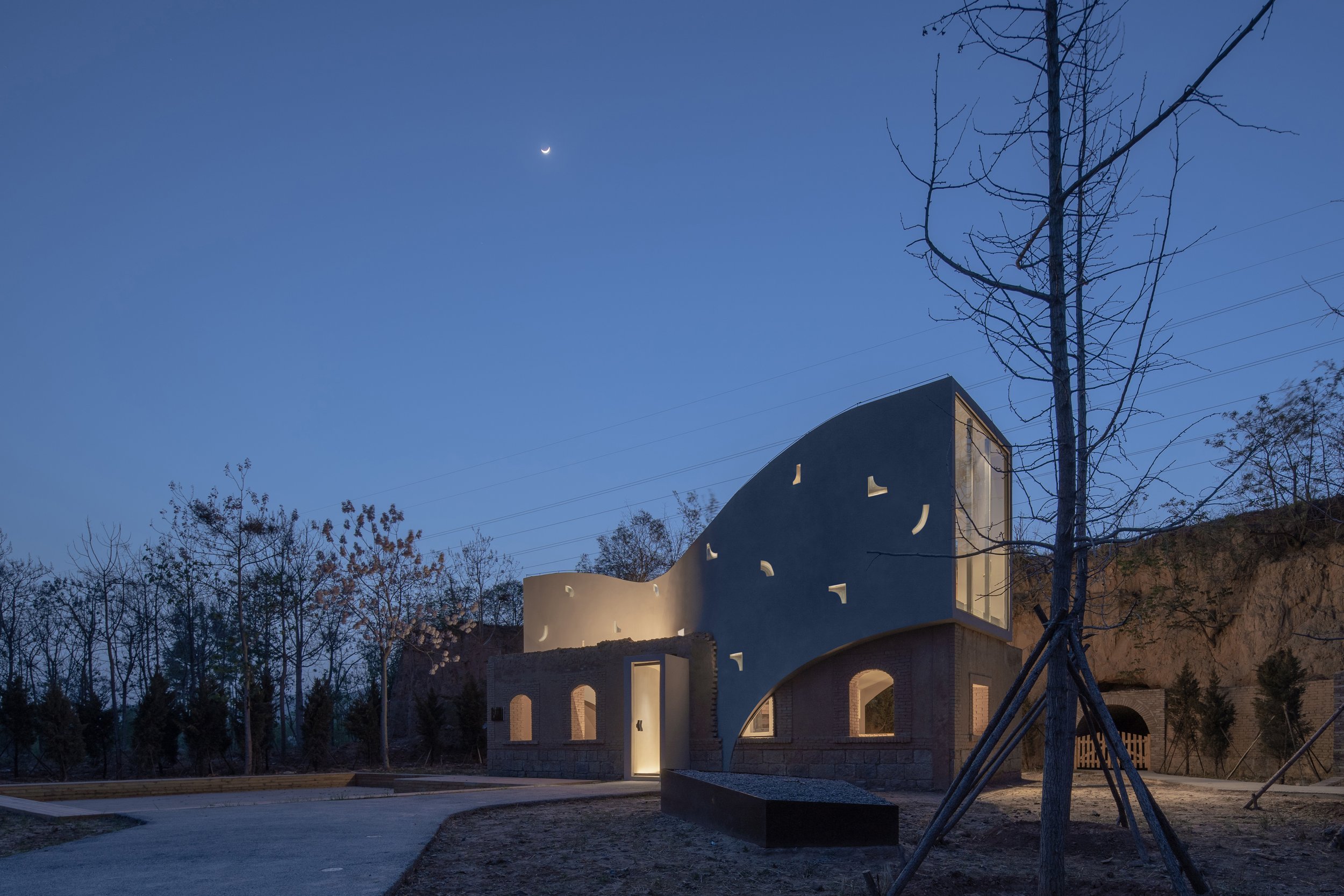
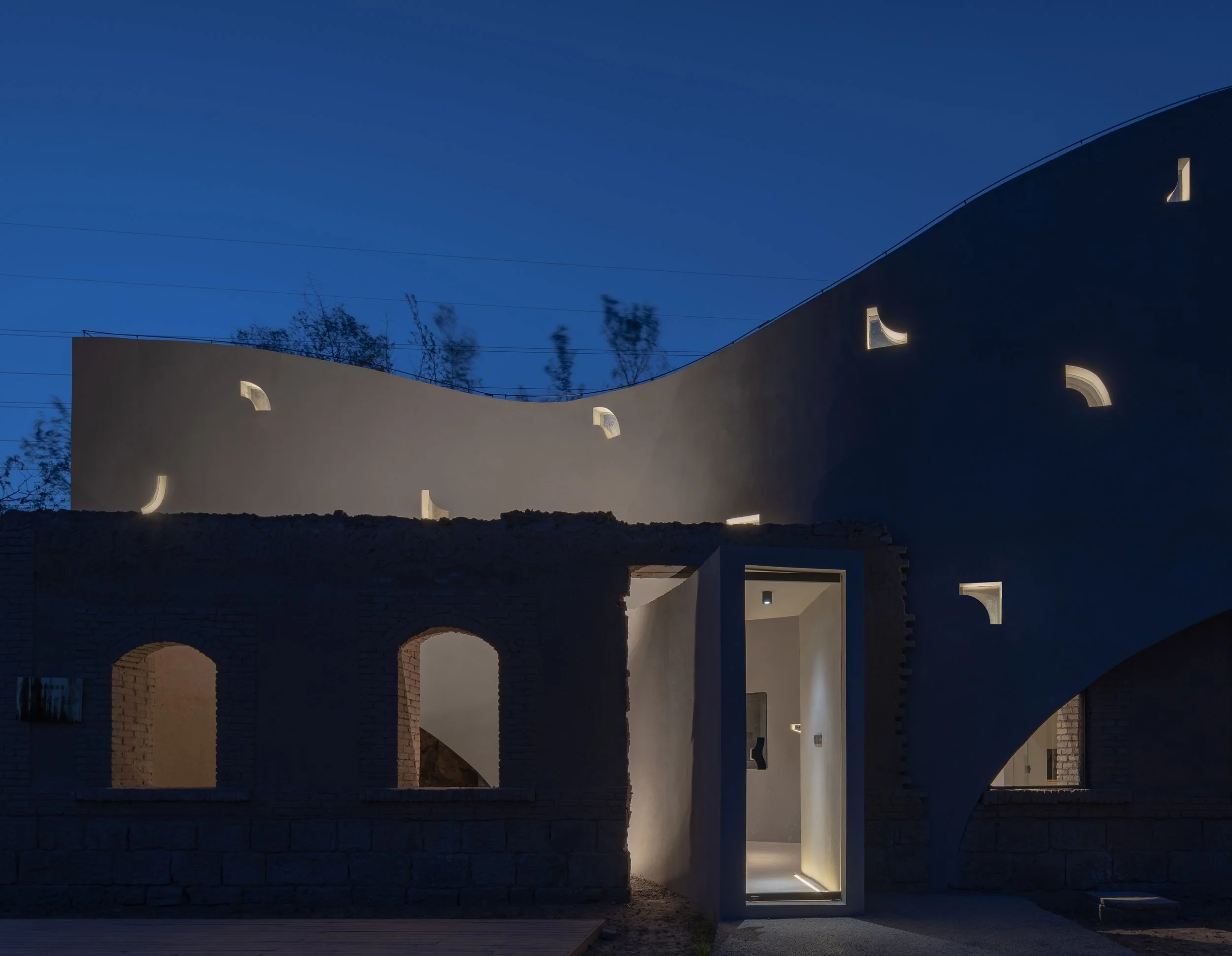
书屋隐藏于村落建筑与树木的怀抱之中,四周茂密的树林与田园景象通过东西两侧大窗映射进屋内,南北两侧立面上预留了许多异形小窗洞以呼应微建筑系列建筑的形态,希望以奇异的形状与光亮带给沉默的山村一些新能量——在白日里勾出奇异的阴影,在黑夜里熠熠生辉。
The library is embraced in the open arms of the village buildings and trees. On the east and west facades of the building, large curtain windows are designed to greet the idyllic, leafy surroundings. The architect hopes to bring new energy to the silent village with interesting geometries and lighting. Many small special-shaped windows are cast with in-situ concrete on the north and south facades to echo the forms of buildings in the miniature series. These irregularly shaped openings curate a play of shadow during the day, and create a backdrop of twinkling lights throughout the night.
Xiuwu 修武
Pavilion, Library 工坊、图书馆
55m2 (Peach Hut), 66m2 (Library), 70m2 (Water Theater)
Lead Architect 主持建筑师:Chen Xi
Design Team 设计团队:Zhu Zhu(Associate in Charge), Huang Jiajie, Zhu Jing, Wang Xingyao, Tian Di, Xu Lvbao, Wang Weiguo, Wen Weijian(Intern), Cao Suying(Intern), Han Xiao(Intern), Xu Zhiwei(Intern)
Clients 委托方: Xiuwu County
Lighting Consultant 灯光顾问: AURA Lighting Design Consultant
Construction Documents 施工图设计: Li Jianhui (architecture), Su Zhimeng, Huang Xiaolong (structure), Gan Bin, Xiao Liangmin (MEP)
Photography 摄影: Zhang Chao
Awards 获奖:
2022 ARCHITECTURAL REVIEW EMERGING AWARDS | FINALIST
2022 英国《建筑评论》新锐建筑奖| 提名奖
2021 AMERICAN INSTITUTE OF ARCHITECTS (AIA) | WINNER: SMALL PROJECT AWARDS
2021 美国建筑师协会(AIA)| 小型项目奖
2021 DEZEEN AWARDS | SHORTLIST: SMALL BUILDING, LONGLIST: REBIRTH
2021 DEZEEN AWARDS| 入围短名单:最佳小型建筑, 入围长名单:最佳改造建筑
2021 ARCHITIZER A+AWARDS | FINALIST: CULTURAL PAVILIONS, DETAILS - CONCRETE
2021 ARCHITIZER A+AWARDS | 入围奖:文化空间、建筑细部-混凝土
2022 ARCHITIZER A+AWARDS | FINALIST: ADAPTIVE-REUSE
2022 ARCHITIZER A+AWARDS | 入围奖:改造项目
2021 FRAME AWARD | WINNER: INTERIOR OF THE MONTH
2021 FRAME AWARD | 月度最佳室内奖